

Shares 2
Graphene Lead-Acid Vs Lithium-Ion Battery Comparison For Electric Bikes
Last updated on 14-Mar-2026 , By Badhon Roy
When buying an electric bike or scooter, the battery is the most important component. It determines the bike’s range, performance, charging time, weight, and long-term cost. Currently, two main types of batteries dominate the market: Graphene Lead-Acid and Lithium-Ion.
In this article, we are going to discuss about these two types of battery which will be helpful for bikers.
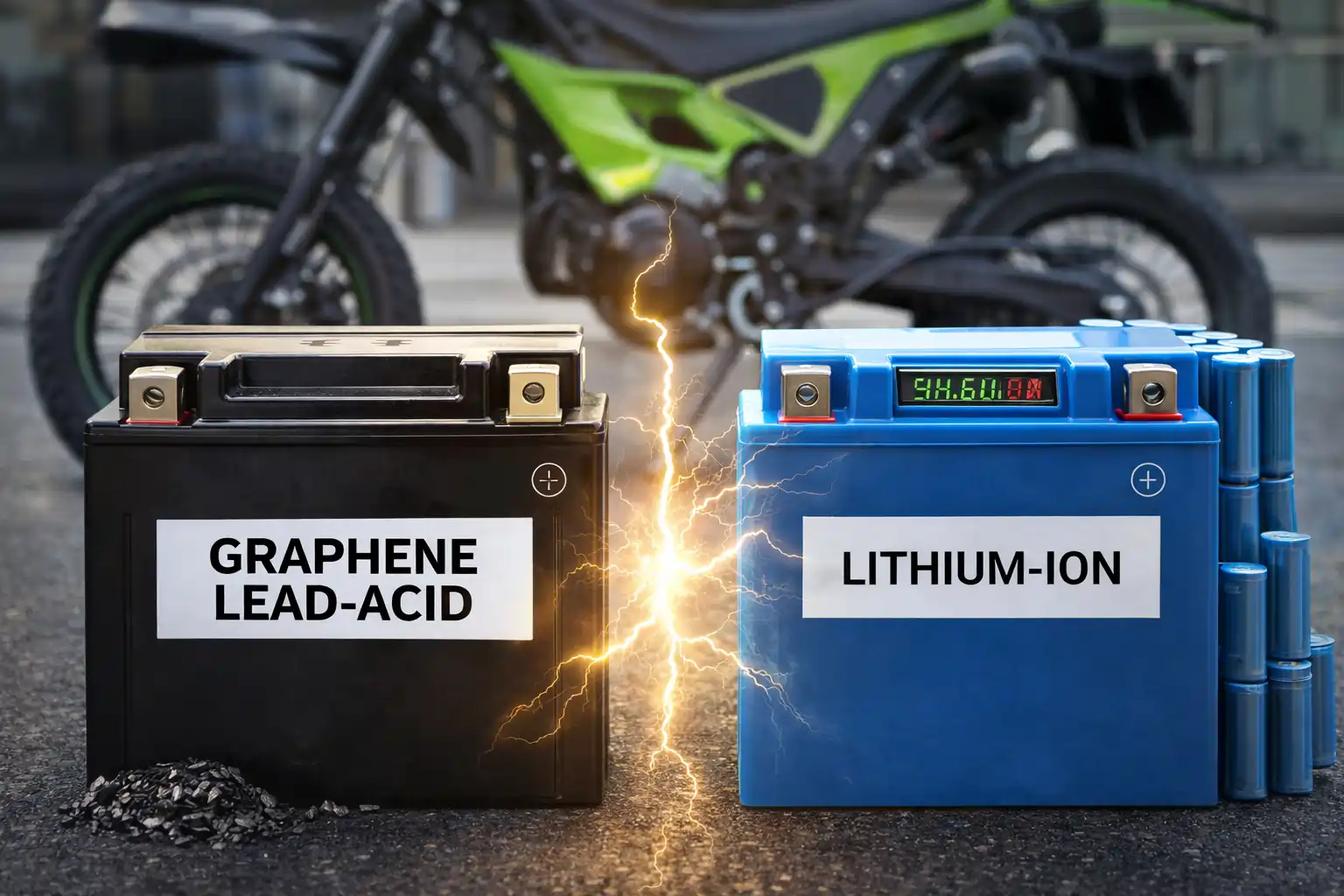
Graphene Lead-Acid Battery
Graphene Lead-Acid batteries are an advanced version of traditional lead-acid batteries. The inclusion of graphene improves charging efficiency and long-term durability. These batteries are very effective for city commuting and daily rides.

They are heavier than lithium-ion, which results in slower acceleration and handling, but they are adequate for moderate speeds. Charging takes slightly longer, but they are safe and easy to maintain. Their affordability makes them a practical choice for budget-conscious riders.
Lithium-Ion Battery
Lithium-Ion batteries are lightweight and powerful. They store more energy relative to their weight, improving acceleration and handling. Their longer range per charge makes them ideal for longer rides or trips outside the city. Charging is very fast, typically taking only one to two hours for a full charge.
They support more charge-discharge cycles, extending battery life. Although more expensive, Lithium-Ion batteries are popular for high-end electric bikes because of their performance and light weight. With proper battery management, risks from heat or overcharging can be minimized.
Graphene Lead-Acid Vs Lithium-Ion Battery - Comparative Analysis
Graphene Lead-Acid and Lithium-Ion batteries differ in multiple ways. Lithium-Ion is better suited for long-distance rides, while Graphene Lead-Acid is sufficient for short city commutes. The heavier weight of Graphene Lead-Acid slows the bike down, whereas Lithium-Ion provides faster acceleration and easier handling. Lithium-Ion charges quickly, while Graphene Lead-Acid is slower but safer. Graphene Lead-Acid is cost-effective and easy to maintain, whereas Lithium-Ion offers superior long-term performance and is better for high-end use.
Choosing the right battery depends on usage patterns and budget. Graphene Lead-Acid is effective and safe for short, daily city rides, while Lithium-Ion is better for long-range, lightweight, and high-performance applications. Riders should consider their riding style, charging convenience, weight, and cost when making a decision.
Stay with BikeBD for all the latest news and updates on bikes and biking.
T
Published by Badhon Roy

About Badhon Roy
Writer
You might also be interested in




Best Bikes
Price: 169800
Price: 255000
Price: 212000
Upcoming Bikes

Price: 0
Price: 0

.jpg.jpeg)